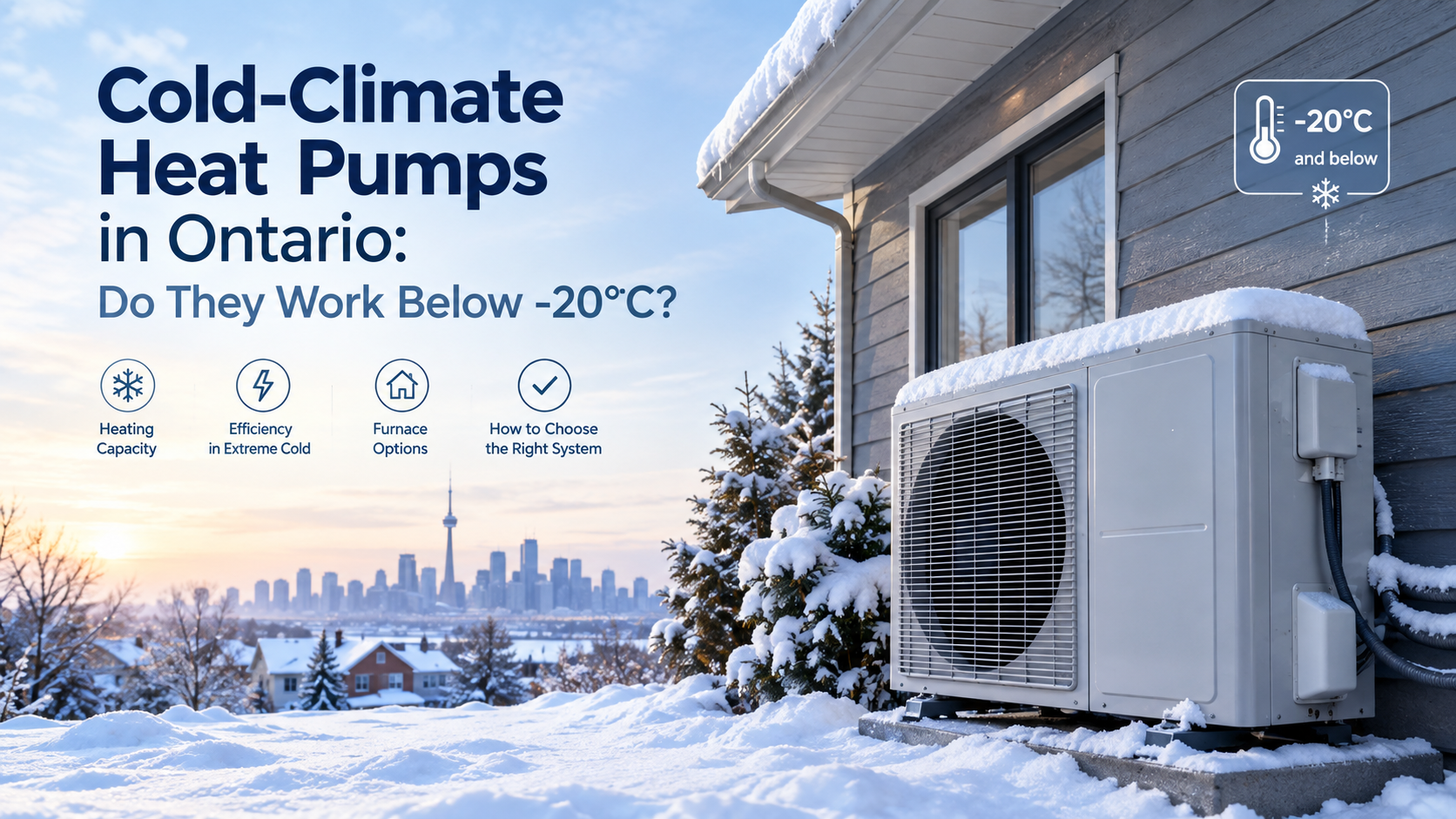
Ontario winters can put serious demands on a home’s heating system. When outdoor temperatures drop to -20°C or below, homeowners often question whether a heat pump can still keep their house comfortable.
That question is especially important for people considering a heat pump as an alternative to a traditional furnace. Heat pumps can be highly effective during moderate winter weather, but their performance changes as temperatures fall.
Modern cold-climate heat pumps are specifically engineered for colder regions and can continue providing heat during severe Ontario winters. However, their heating capacity and efficiency depend on the outdoor temperature, the equipment selected and the characteristics of the home.
Here is what homeowners should know before making a decision.
What Makes a Heat Pump "Cold-Climate"?
A heat pump does not create heat in the same way as a gas furnace. Instead, it transfers available heat energy from one location to another.
During winter, the outdoor unit absorbs heat from the surrounding air. The refrigerant and compressor system then increases the temperature of that energy so it can be released inside the home.
Even very cold air contains some usable heat. The challenge is that extracting and transferring that heat becomes more demanding as outdoor temperatures continue to fall.
Cold-climate heat pumps are designed with this situation in mind. Manufacturers use specialized components, controls and operating strategies to help the equipment continue working efficiently in colder conditions.
That is why Ontario homeowners should compare equipment specifically designed for cold-weather operation rather than assuming every heat pump will perform the same way.
Will a Heat Pump Still Work Below -20°C?
Some cold-climate heat pumps are designed to operate at temperatures below -20°C.
However, there is an important point to understand: operating at a particular temperature does not mean the system will deliver the same heating capacity it provides at 0°C or 5°C.
As outdoor temperatures become colder, the heat pump has less available heat energy to collect. The compressor may also need to work harder, which can affect both capacity and efficiency.
For that reason, homeowners should look beyond the lowest temperature listed in a manufacturer’s specifications.
When comparing systems, ask your HVAC contractor for the unit’s expected heating output at several temperatures, including:
- -10°C
- -15°C
- -20°C
- -25°C or lower, where applicable
This information gives you a better indication of how the equipment may perform during an actual Ontario cold snap.
What Happens to Efficiency During Extreme Cold?
Heat pump efficiency generally changes as outdoor temperatures fall.
A system operating during relatively mild winter conditions can transfer heat more easily than it can during an extreme cold event. As the outdoor temperature decreases, the equipment may consume more energy while delivering less heat than it would under milder conditions.
This does not mean a properly selected cold-climate heat pump stops being useful during severe weather. It simply means homeowners need to understand the system’s performance curve rather than relying on a single efficiency rating.
Before purchasing equipment, ask about:
- Heating capacity at low outdoor temperatures
- COP at different temperatures
- Minimum operating temperature
- Capacity at -20°C and below
- Supplemental heating options
- Manufacturer performance testing
- Expected performance for your home’s heating load
A statement such as “operates down to -30°C” tells you that the equipment can function at that temperature. It does not necessarily tell you how much heat the system will provide.
Your Home Can Be Just as Important as the Heat Pump
Selecting the right equipment starts with understanding the building it will heat.
Consider two houses with identical square footage. One might have good insulation, efficient windows and very little air leakage. The other could have older windows, inadequate insulation and several areas where heated air escapes.
Despite being the same size, those homes can have very different heating requirements.
A professional assessment should consider factors such as:
- Home size and layout
- Insulation levels
- Window and door condition
- Air leakage
- Ductwork
- Ceiling and wall construction
- Existing heating equipment
- Local winter conditions
This becomes particularly important when comparing furnace prices in Toronto with the cost of installing a heat pump.
The equipment price is only one part of the overall investment. Electrical upgrades, ductwork changes, installation requirements and future energy costs can affect the total cost of either option.
A heat pump can also provide air conditioning during summer, which may reduce the need for separate heating and cooling equipment.
Is Keeping Your Furnace an Option?
Installing a heat pump does not always mean removing your furnace.
Some Ontario homes can use a dual-fuel or hybrid heating arrangement. In this setup, the heat pump handles a large portion of the heating demand while the furnace provides additional heat when required.
This approach can be useful when a homeowner wants to take advantage of heat pump technology without completely eliminating an existing furnace.
The condition of the current furnace should also be considered.
If the equipment is relatively new and operating properly, keeping it as supplemental heat may be practical. If it is older or experiencing repeated problems, you may want to compare the cost of furnace repair Toronto homeowners commonly face with the cost of replacing the system or moving to a different heating setup.
There is no universal solution. The right configuration depends on the home’s heating requirements, existing equipment and the homeowner’s long-term plans.
How to Choose a Heat Pump for an Ontario Home
The lowest advertised operating temperature should not be the main factor when selecting equipment.
Instead, look at how much heating capacity the system can actually provide during the temperatures your home experiences.
For example, a heat pump advertised as operating at -25°C may still provide significantly different output at -5°C, -15°C and -25°C. Comparing those figures can help you determine whether the system can meet your home’s heating demand.
Installation quality also matters.
The outdoor unit needs enough unobstructed airflow and should be positioned where snow accumulation, ice and roof runoff will not interfere with operation. Drainage and accessibility for maintenance should also be considered.
A poorly positioned outdoor unit can create problems even when the equipment itself is appropriately designed for cold weather.
If you are searching for furnace repair near Toronto, it can be useful to speak with an HVAC professional who understands both conventional heating systems and cold-climate heat pumps. That allows you to compare repair, replacement and hybrid options based on the condition of your existing system.
Cold-Climate Heat Pump FAQs
1. Can a heat pump heat a home at -20°C in Ontario?
Yes, some cold-climate heat pumps are designed to continue operating at -20°C and below. However, heating capacity varies between models and generally changes as outdoor temperatures decrease. Check the manufacturer’s low-temperature performance data before selecting equipment.
2. Are cold-climate heat pumps practical for Ontario winters?
They can be suitable for many Ontario properties when the equipment is properly sized and installed. The important factors include the home’s heat loss, insulation, system capacity and expected winter temperatures.
3. Should I repair my furnace or install a heat pump?
The answer depends on the furnace’s age, condition, repair history and expected remaining service life. Your home’s heating requirements and the cost of a new installation should also be considered. A qualified furnace technician Toronto homeowners can consult can evaluate the existing equipment and explain the available options.
4. Are furnace prices in Toronto higher or lower than heat pump costs?
There is no single price that applies to every installation. System size, equipment selection, labour, electrical work, duct modifications and installation complexity can all affect the final cost. Compare the complete installed system rather than looking only at the equipment price.
5. Can a heat pump replace a furnace completely?
In some homes, yes. However, the answer depends on the heating capacity required during the coldest weather and the performance of the selected equipment. A professional heat-loss calculation can help determine whether a heat pump can handle the home’s heating demand without supplemental equipment.