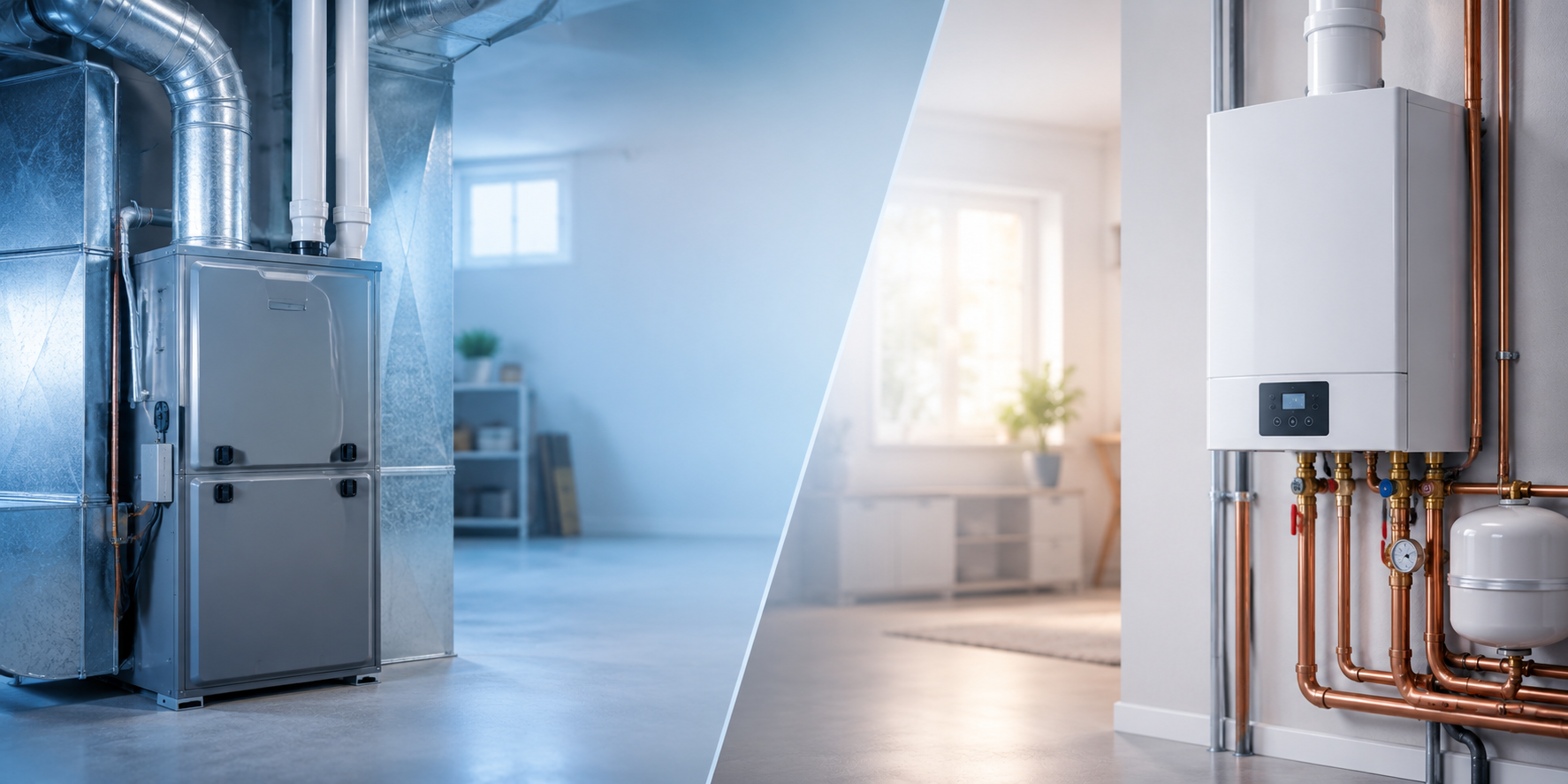
When homeowners in Ontario face heating issues, looking for furnace repair near me Toronto is usually the initial step toward a comfortable, cozy home again. However if your HVAC system is getting old or you are thinking of an upgrade, you may speculate if a furnace is the correct option or whether a boiler provides better results. Both furnace and boiler can heat Ontario homes efficiently, however they use distinct ways to distribute heat and have dissimilar pros.
Table of Contents
ToggleHow Does a Furnace Work?
A furnace heats air and then distributes the hot air throughout the home by the way of ducts. Gas furnaces are popular in Ontario as they can heat up rooms quickly and often can be used in conjunction with an existing central air conditioning system.
Modern furnaces are designed to be highly efficient. They do an exceptional job of heating your home. But they can lose a significant amount of their efficiency when their filters get clogged, their burners get dirty or their parts wear down.
Another benefit of a furnace is that they respond fast when the temperature drops, the thermostat senses less of the temperature and the air is warmed up in the vents. This makes furnaces a good and practical choice for many homes that have ducts.
How Does a Boiler Work?
A boiler heating unit uses a distinct way by heating up the water and later flowing through the house in copper tubes to radiators, baseboards, and radiant floor heating systems.
One of the advantages of a boiler is the ability to store heat in the water which makes for a very consistent and even temperature in the building. The heat output from radiators and underfloor heating will long linger after the boiler has turned off.
Boilers also do not require forced-air ducts. Some homeowners may find this feature appealing as there is no blower that can circulate air through the house. At the same time, the installation of a boiler in a house that was built with forced-air heating in mind may involve substantial modifications.
A boiler heating unit uses a distinct way by heating up the water and later flowing through the house in copper tubes to radiators, baseboards, and radiant floor heating systems.
One of the advantages of a boiler is the ability to store heat in the water which makes for a very consistent and even temperature in the building. The heat output from radiators and underfloor heating will long linger after the boiler has turned off.
Boilers also do not require forced-air ducts. Some homeowners may find this feature appealing as there is no blower that can circulate air through the house. At the same time, the installation of a boiler in a house that was built with forced-air heating in mind may involve substantial modifications.
Which System Is More Efficient?
Honestly, there is no global answer to it. Choosing between furnace and boiler depends up on various characteristics such as:
- the equipment itself,
- its age,
- whether it is properly maintained,
- the characteristics of the building or home.
A contemporary high-efficiency furnace can furnish a large quantity of its fuel into functional heat. However, a high performing boiler can also give amazing efficiency when accurately installed and well maintained.
Moreover, the state of the buildings also plays a vital role. If your building is inadequately insulated, draughty windows, air leaks and poor weatherproofing can result in each of two to work extra hard. But, enhancing the overall home’s energy efficiency may have a bigger impact on heating bills than only switching from either type of heating system.
Comfort During Ontario Winters
Ontario’s cold winter temperatures make reliable heating especially important. Furnaces can provide rapid heating, which is useful when a home needs to warm up quickly. Their ductwork supports both heating and cooling when linked to a suitable central air conditioning system.
Toronto’s extreme cold season temperatures require trustworthy and consistent heating. Furnaces can offer quick heating, which is vital when a home requires rapid heat. On the other hand, boilers offer a comparatively different kind of comfort. Radiators and radiant floors circulate heat slowly, resulting in a uniform indoor thermal reading.
The favourable practice mainly depends on the home’s architecture and expectations of homeowners. A unit that performs well in one home may not be functional in another.
Maintenance Makes a Difference
Nonetheless, ordinary maintenance plays a significant part in productivity and reliability. A furnace may need investigations of its filter, burner, blower, electrical components, heat exchanger and safety controls.
Whereas, boilers need different kinds of checkups, which includes investigation of pumps, water pressure, valves, pipes, and other factors. Handling small problems in advance can assist in avoiding bigger issues and help the system operate as planned.
In case a furnace makes uncommon sounds, producing poor airflow, or shortcoming to maintain the wanted temperature, planning Furnace repair toronto service can assist in identifying the actual issue before something bigger happens.
Which Heating System Fits Your Home?
Deciding between a boiler and a furnace should include above equating efficiency levels. Residents should ponder the current heating system, installment requirements, space available, needs for maintenance, favourable comfort, and operating costs.
For instance, a house with present ductwork may perform well to a furnace, especially if the exact unit can assist central cooling. A home beforehand equipped with radiators or radiant flooring may be suitable to a boiler.
Residents exploring HVAC Toronto fixes should contemplate the situation of their present system. Most of the time, maintaining and fixing a present unit is far more useful than replacing it. However in some cases, an aging unit may reach a point where updating or replacing can give better results in terms of efficiency.
Frequently Asked Questions:
Does anyone have recommendations for HVAC professionals in Toronto to do an inspection of furnaces and boilers?
Yes, look for a TSSA-licensed technician with experience in both forced-air and hydronic (boiler) systems, since not every HVAC company services both types equally well. HVAC Trust inspects furnaces and boilers across the Toronto area, and a proper inspection should cover safety controls, efficiency levels, and any wear-related issues before winter demand peaks.
Which heating system is better for older Toronto homes?
It depends on what the home was originally built with. Older Toronto homes with existing radiators or radiant flooring generally do better sticking with a boiler, since converting to ductwork is invasive and costly. Homes already fitted with ductwork usually get more value from a modern high-efficiency furnace, which also allows central air conditioning to run through the same system.
Does a boiler heat a home better than a furnace?
Neither is universally “better” a boiler delivers steady, even heat through radiators or radiant floors, while a furnace heats faster through forced air. Boilers tend to feel more consistent room-to-room, but furnaces respond quicker when temperatures drop suddenly, which matters during Toronto’s sharper cold snaps.
Is a boiler or furnace better for an Ontario home?
The right choice comes down to the home’s existing setup, insulation quality, and the homeowner’s comfort preference rather than one system being objectively superior. A well-maintained furnace and a well-maintained boiler can both perform efficiently in Ontario’s climate; the bigger factor is usually how well the home itself retains heat.
How long does a boiler last compared with a furnace?
Boilers typically last longer than furnaces, often 20-30 years with proper maintenance, compared to a furnace’s typical 15-20 year lifespan. That said, a boiler’s higher upfront installation cost and the fact that it doesn’t include central air conditioning are worth weighing against its longer service life.
Is a furnace better if my home already has ductwork?
Generally yes. If ductwork is already in place, a furnace is usually the more practical and cost-effective choice, since it can use that existing infrastructure and pair with central air conditioning. Switching to a boiler in a duct-equipped home would mean adding an entirely separate heat-distribution system.
How can I improve indoor air quality in my home?
Regular filter changes, duct cleaning, and addressing humidity levels all help, along with scheduling routine furnace or boiler maintenance so dust and debris don’t recirculate through the system. A technician can also recommend add-ons like a whole-home air purifier or humidifier depending on the specific air quality issues in your home.